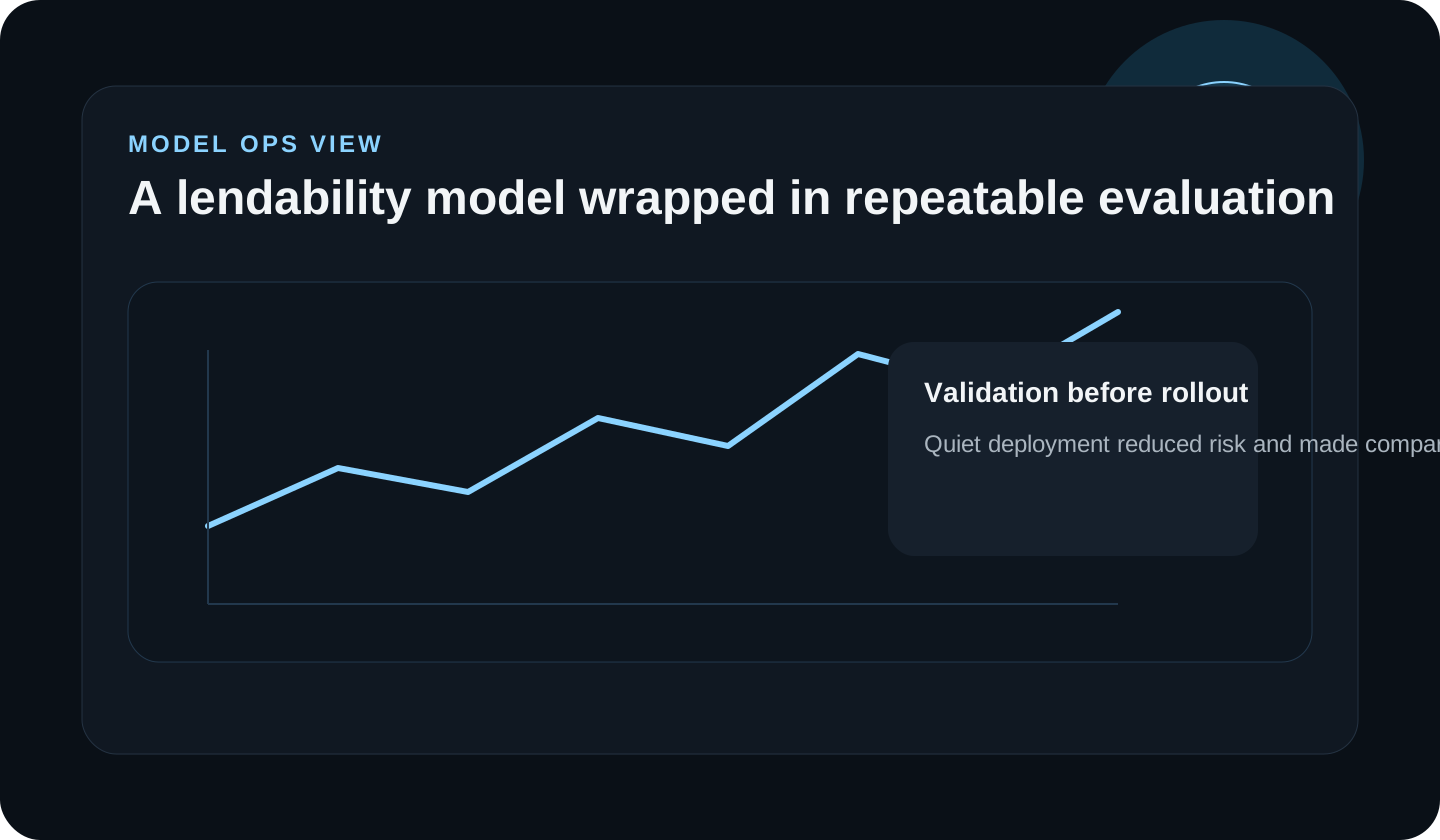
Challenge
The initial challenge was to develop a model that could help estimate lendability for a specific segment. The bigger question appeared immediately after that:
How do you make sure the work is useful beyond the first version?
Without a repeatable system, model efforts tend to become fragile:
- hard to reproduce later
- difficult to compare versions cleanly
- inconsistent evaluation
- too much dependence on the original builder
- slower future iteration
Context
The goal was to build two things at once:
- a working lendability model
- the system around it so it could be retrained, evaluated, and improved later
That meant the project had to support clear training flow, repeatable evaluation, future comparison, and a cleaner deployment path into validation.
Approach
The work moved quickly from concept to a usable first version, but the focus was not just speed.
- Define the outcome the model was meant to support.
- Build an initial model using practical methods suited to structured business data.
- Wrap training, evaluation, and comparison into the deliverable itself.
- Deploy the model into a validation phase instead of changing the customer experience immediately.
- Prepare the workflow for future retraining and comparison.
System / workflow design
The long-term value came from repeatability, not just from the first score.
- versioned datasets and inputs reduced ambiguity
- standardized run configuration made comparison easier
- evaluation outputs became easier to inspect and explain
- validation before rollout reduced operational risk
What shipped
The delivered system included a working lendability model, a repeatable training and evaluation process, and a validation path that made later iteration more trustworthy.
Outcomes
- faster movement from idea to usable model
- better future maintainability
- cleaner comparison between model versions
- stronger connection between analytical work and product decisions
Lessons learned
A few principles stood out:
- speed matters, but repeatability matters more
- dark-mode validation reduces risk
- one-off experiments rarely create long-term business value
- the workflow around the model can matter as much as the model itself
Why this matters
This is a reusable pattern for any business where AI or analytics influences decisions over time: do not just build the model, build the process that makes the model testable, maintainable, and useful after version one.