Challenge
A lot of people want to post consistently, but the real bottleneck is not ideas. It is turning scattered wins, notes, and rough thoughts into something worth publishing without burning too much time every week.
There was already useful source material in the form of weekly accomplishments, project notes, experiments, and build lessons. The problem was workflow.
Without a system, the process created the same issues over and over:
- too much time spent turning raw notes into polished posts
- inconsistent publishing cadence
- too much dependence on finding time to write
- no real feedback loop for improving the process itself
Context
The goal was not to replace judgment. The goal was to reduce the time spent in the messy middle between "I know what happened" and "I have something worth posting."
That meant building a system that could:
- collect the right source material quickly
- turn it into clearer storylines
- produce stronger first drafts
- preserve a human review step
- support a repeatable publishing cadence
- improve over time instead of acting like a one-off prompt
Approach
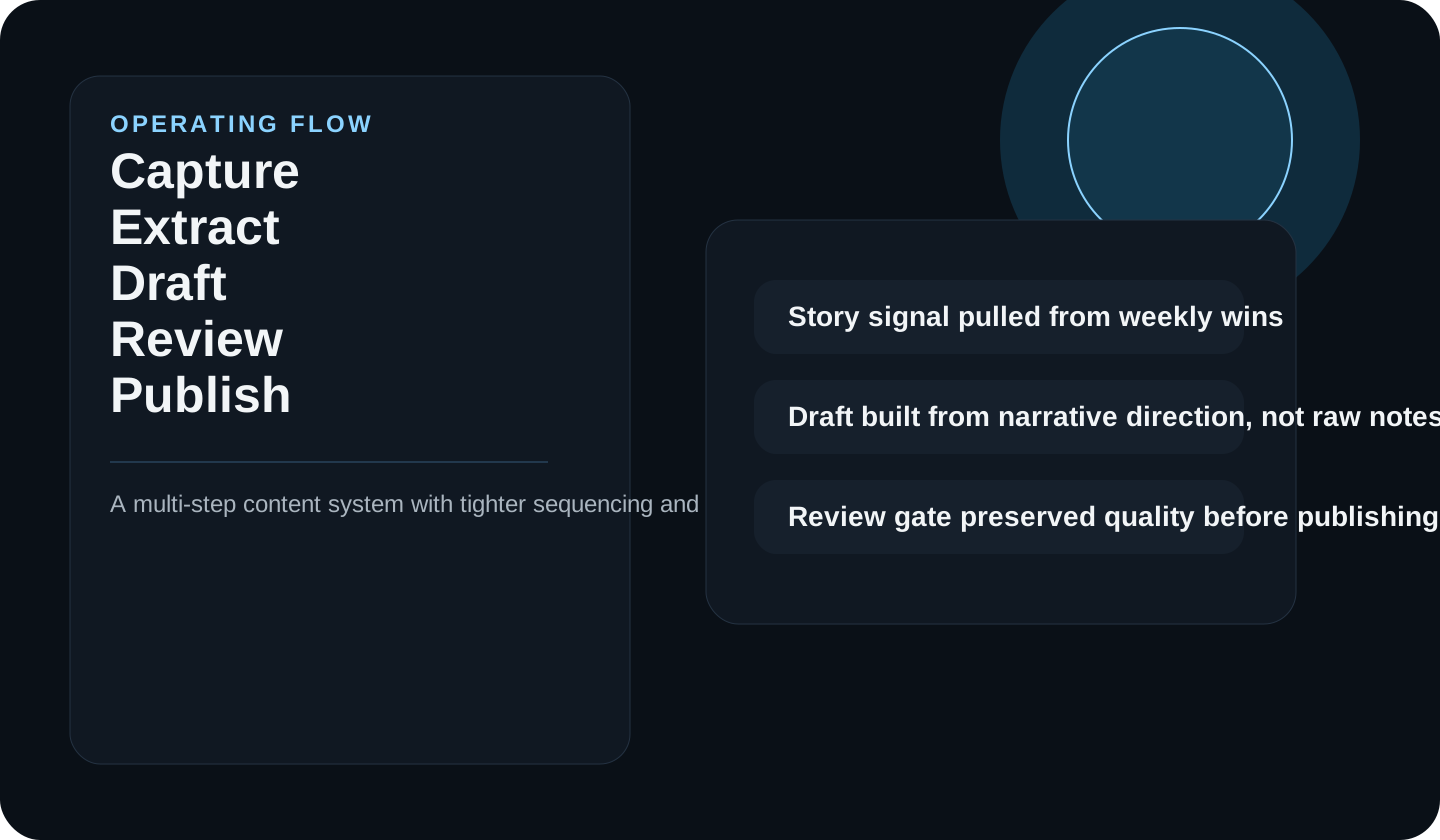
The workflow was designed as a staged system rather than a single prompt.
- Capture weekly accomplishments, project updates, and rough observations in a structured format.
- Extract the strongest story, lesson, failure, or result from that source material.
- Draft a narrative direction before asking for finished post copy.
- Generate draft posts from the narrative direction.
- Route every draft through human review before publishing.
- Observe what breaks so the workflow can improve over time.
System / workflow design
The value did not come from the writing model alone. It came from structuring the workflow around the actual bottlenecks.
- source capture kept inputs consistent
- story extraction improved signal quality before drafting
- narrative shaping made the drafts less generic
- review gates preserved voice and quality
- staged handoffs made it easier to see where the process was failing
What shipped
The delivered system created a repeatable path from raw notes to reviewed LinkedIn drafts, with explicit stage ownership and a clear quality bar at each handoff.
Outcomes
- lower friction from raw idea to usable draft
- more consistent publishing rhythm
- better quality control before scheduling
- a workflow that could be tuned instead of rewritten from scratch
Lessons learned
The first version was not perfect. Parts of the workflow advanced before the full review loop had finished, which exposed a sequencing problem.
That turned into the most useful lesson from the build:
- orchestration matters more than clever prompting
- timing and review gates matter as much as generation quality
- observability is what makes a multi-step AI workflow improvable
Why this matters
This is not just a content project. It shows a reusable way to take a messy process, separate it into stages, use AI where it adds leverage, and keep human review where judgment still matters.